MFA Admissions
Students who have earned a BA or equivalent degree may apply for admission to the MFA program in fiction or in poetry. Please read this page before applying: https://gradapply.wisc.edu/apply/.
Fiction writers and poets are admitted in alternating years. This year we are reading poetry: the application period opens in mid-September and closes December 15, 2026, for admission in fall 2027. We are not reading fiction applications this year; the next application deadline for fiction is December 15, 2027, for admission in fall 2028. All application materials—including transcripts, letters of recommendation, a statement of purpose, a writing sample, a CV, and the application fee—must be submitted online in pdf format by midnight, U.S. Central Time, on December 15.
Application Process
To submit online, please prepare the materials listed below, in pdf format. Please note that any use of Artificial Intelligence is strictly prohibited in the writing, revision, or assembly of your application materials. Writing samples or statements of purpose found to have utilized AI will be disregarded.
Our applications system may not be active or up-to-date until mid-September. However, it is strongly recommended that you begin the application and request your recommendations as early as possible; you do not need to have all of these materials prepared the moment you begin the application:
- A statement of approximately 500 words explaining your reasons for pursuing this graduate degree.
- A poetry manuscript, ten single-spaced pages in length, in eleven- or twelve-point font, with each new poem beginning on a new page. If you wish, you may include a cover sheet listing the enclosed poems, which does not count toward your ten-page limit. We will not read any poems beyond the tenth page. Your name should appear on each page of the writing sample, and each page should be numbered.
- A curriculum vitae or resume in pdf format is also required by the University.
- You will be asked to supply the names and email addresses of three recommenders. If you do not use a dossier service, each recommender will receive an email link to the online letter of recommendation form. If you do intend to use a dossier service, please confirm with that service the best way to proceed with an electronic application. If you are using the Interfolio dossier service, you will first need to find the unique email addresses associated with each letter in your dossier. To find those addresses, log in to your Interfolio “letters” portal and click “View Details” for the first letter you wish to upload. On the letter’s “details” page, scroll down until you see a section labeled “Document Email.” Copy the email address (it should look something like “send.Lastname.L123CD4567@interfolio.com”) and paste that into your UW application, in the field where you are asked to enter your recommender’s email address. Repeat this process for each of your three letters.
- An unofficial copy of your undergraduate transcript(s) uploaded in pdf format. With the exception of study-abroad transcripts, you should provide transcripts from every post-secondary educational institution you attended, even if transfer credits from one school appear on the transcripts of another. You will be required to provide an official transcript should you be offered admission to the Graduate Program in Creative Writing.
- GRE scores are not required and will not be considered for admission. Simply leave these fields blank on the online application form.
For questions about the MFA Program, writing sample, or statement of purpose, please contact Sean Bishop, Program Administrator, at mfamail@english.wisc.edu. For all questions related to the online application itself, or technical problems, please contact Cheryl Loschko and Vivan Ye in the Department of English. As a courtesy, please make sure your question is not answered on this website before emailing.
Once you’ve prepared the above materials, you may apply online by clicking here.
Wisconsin Protocol
Like most institutions with a graduate program in creative writing, the University of Wisconsin–Madison is a member of the Council of Graduate Schools and as such is bound to the following resolution: “Students are under no obligation to respond to offers of financial support prior to April 15; earlier deadlines for acceptance of such offers violate the intent of this Resolution.” You can see the full resolution as well as a list of council members by clicking here.
We at Wisconsin advise any applicant who is feeling pressured to accept another MFA program’s offer before the April 15th deadline to simply send the program a friendly email that says something to the effect of, “I see that your institution is a member of the Council of Graduate Schools. As such, I believe that I have the right to consider your offer up until the April 15th deadline as established by the council. Thanks so much!”
At Wisconsin, our promise is simple:
- We will make our decisions by March 15th.
- Should you be placed on our waitlist, we will tell you up front, though we might not be able to tell you exactly where you are on the waitlist.
- We will abide by the April 15th deadline as established by the Council of Graduate Schools.
- Out of respect to you, we will not call you regularly to see if you’ve made a decision.
- All our students are fully funded, which means that your funding is secure until April 15th.
Campus Visits for Prospective Students
While we are happy to answer questions about our graduate programs via email and to meet with anyone who has been admitted to the MFA program, it is difficult for us to meet with potential applicants or with applicants who have yet to be accepted. We wish this were not the case, but we are a small group trying to run three distinct programs, teach our classes, and meet our various responsibilities.
We also cannot provide you with contact information for our current MFA students unless you’ve been admitted to the program (or placed on the waitlist). Since we receive around 600 applications for our program we need to do our best to protect the writing time of our 12 graduate students. You are always welcome to come to campus and take one of the University’s free guided tours. And please also feel free to drop by the Creative Writing suite at 6195 Helen C. White Hall and say hello if you’re passing through Madison. If you don’t see a bunch of bookcases full of faculty, fellow, and student books—and if you don’t hear laughter—then you are not in the Creative Writing suite.
Meet Our MFAs
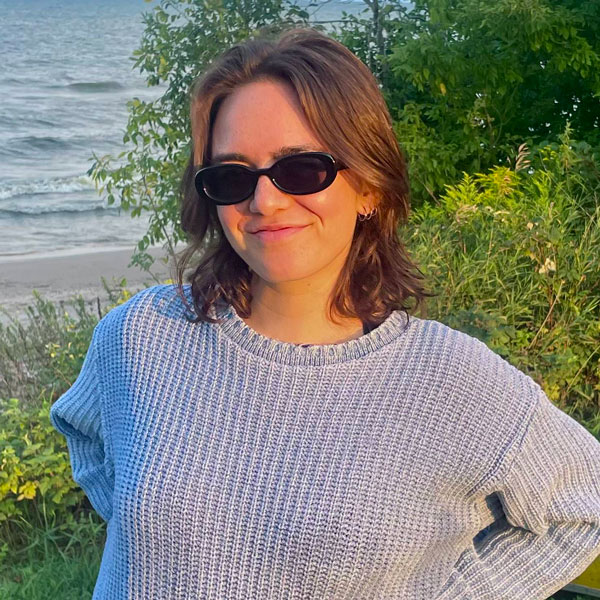
Mira Braneck (MFA in fiction) is a reader and writer from New Jersey. She lives in Madison, Wisconsin, where she is at work on her first novel.
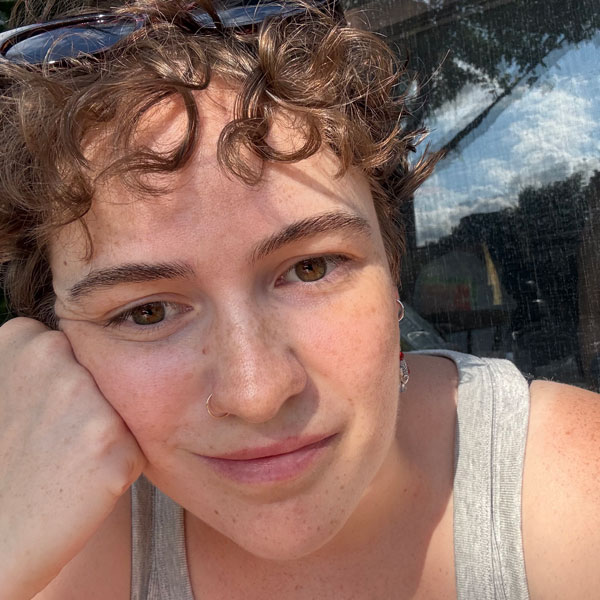
Morgan Canaan (MFA in fiction) is from Richmond, Virginia. She studied English and Feminist, Gender, and Sexuality Studies at Stanford University, where her fiction was awarded the Mary Steinbeck Dekker Award. Recently, she was a finalist for the Michigan Quarterly Review’s Jesmyn Ward Prize. Her stories appear or are forthcoming in Ninth Letter and The Georgia Review. She is at work on a novel and a collection of short stories.
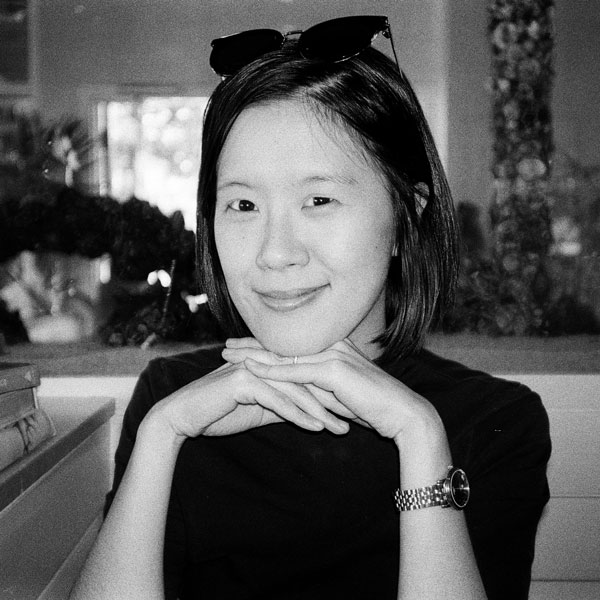
Na Chen (MFA in fiction) is a fiction and creative non-fiction writer from Fuzhou, China. Her work moves between family dynamics, female friendship, and immigrant life. She has worked as a journalist and a product designer in China and the U.S.

Aretina R. Hamilton (MFA in poetry) is from Louisville, Kentucky. She holds a PhD in Geography from the University of Kentucky and is a poet and interdisciplinary scholar whose work explores Black geographies, landscape, and memory. Drawing from archival research, spatial theory, and lived experience, her writing examines how race and place shape one another—how land and the body remember what institutions attempt to erase.

Sarah Lynn Hurd (MFA in fiction) is a writer and poet from Michigan. Her writing often explores relationships, loss, nostalgia, and perception. Her fiction has been nominated for Best Small Fictions and Best of the Net, and she’s been shortlisted for the Bridport Prize in poetry and flash. She has a BA in creative writing and English literature from Grand Valley State University. Stop by sarlynh.com to visit her online.

Michael Imossan (MFA in poetry) is an editor of Ibibio Origin. He is the author of the poetry chapbooks The Smell of Absence (Akashic Books, 2025) and For The Love of Country and Memory (PoetryColumn-NND, 2022). He is the winner of the 2024 Sillerman First Book Prize for African Poetry, for his debut full-length collection All That Refuses to Die (U. of Nebraska Press, 2026.) He is a recipient of the PEN International Writers grant.

Ji Kim (MFA in fiction) is from the Washington, D.C., area. She writes about the quiet ways history may enter everyday life. Her writing explores memory, family, belonging, and the ways stories travel across cultures and generations. She is interested in how form and technology can change the experience of those stories. Her work has appeared in The Codex, Little Patuxent Review, Street Sense Media, and Greater Greater Washington. She is currently at work on a novel and a collection of short stories.

Maurice J. Norman (MFA in poetry) is a native North Carolinian writer and poet.

Blaine Purcell (MFA in poetry, they/them) is a writer from Greensboro, North Carolina whose work reckons with gender, the archive, violence, and their lived experience in the American South. Purcell graduated from UNC Chapel Hill in 2024 with degrees in Poetry and Black Studies. They are a current reader for Callaloo, have been published in Ghost City Review, The Pinch, and Beaver Magazine, and they were the winner of a 2024 University and College Prize from the Academy of American Poets.

Phương Uyên Huỳnh Võ (MFA in poetry) is from Anaheim, California and Sài Gòn, Việt Nam. Her work has been featured in Crab Creek Review, Two Hawks Quarterly, diaCritics, Vănguard, and others. They are an alumnae of the Sewanee Writers’ Conference, VONA, Roots. Wounds. Words, The Kenyon Writers’ Workshop, and Fulbright. In their free time, Phương likes to practice piano and read astrology.
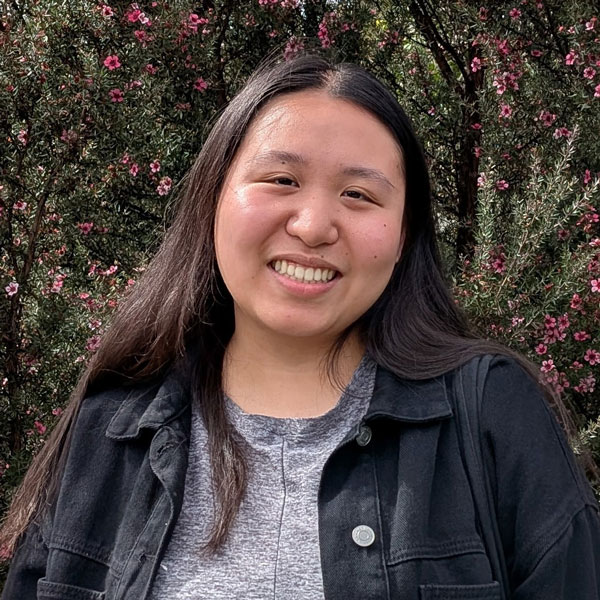
Ivy Xun (MFA in fiction) is a writer from Maryland. She holds a B.A. in Writing Seminars from Johns Hopkins University, where she was awarded the Jacob H. Hollander Prize in writing. Previously, she worked in Taiwan and Washington, D.C.
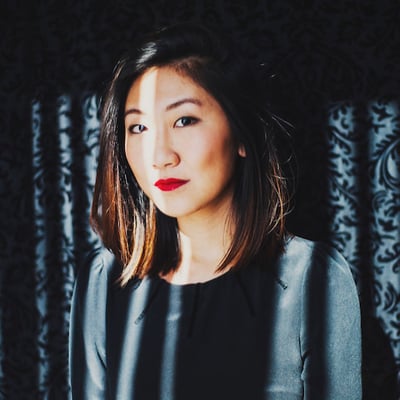
Alumni Spotlight: Lucy Tan
Lucy completed her MFA at UW–Madison in 2016, receiving the August Derleth Prize for excellence in teaching. She also returned to Madison as the Wisconsin Institute for Creative Writing’s James C. McCreight Fiction Fellow, in 2018. Lucy is the author of What We Were Promised, which was long listed for the Center for Fiction First Novel Prize and named a Best Book of 2018 by The Washington Post, Refinery 29, and Amazon. Her work is published or forthcoming in journals such as McSweeney’s, Asia Literary Review, and Ploughshares.




Contact Us
Creative Writing Admissions FAQ
If you do not find your answers in this FAQ, please look through the Graduate School FAQs before contacting Sean Bishop, Creative Writing Program Administrator, at mfamail@english.wisc.edu.
- Q: Do you offer an MFA in creative nonfiction? A: While students may take creative nonfiction classes as electives (we offer sections of CNF nearly every semester), we do not offer an MFA in creative nonfiction.
- Q: Do you offer a PhD in creative writing? A: We do not. While students currently enrolled in UW–Madison’s PhD programs may apply for an Internal or External Minor in Creative Writing, the PhD remains a scholarly degree requiring a scholarly dissertation.
- Q: Must I have a BA in English to apply (or do you give preference to English majors)? A: No and no.
- Q: Are you looking for a particular kind of writing? How can I improve my chances of being admitted? A: Selecting among writing samples is an admittedly subjective process. Rather than restrict ourselves to a particular style of writing, we are interested in voices that strike us as fresh and compelling. We see our role as helping our students become the writers they want to be, as opposed to urging them to conform to a particular style. Applicants may wish to read the work of our MFA alumni, our Institute fellowship alumni, and our faculty to get an idea of the work we’ve been drawn to in the past—but we also love expanding our horizons or being surprised by exciting new voices. We suggest that, while you shouldn’t give short shrift to any of your application materials, the bulk of your energy should go to polishing the writing sample that most excites you, which is the most important factor by far in our decision process.
- Q: How do I save my Microsoft Word documents as pdfs? A: Simply “Save As” from the file menu in Microsoft Word, and then select “pdf.” If this does not work, “print” the document and then select “pdf” as the output, rather than a printer.
- Q: What’s an “unofficial transcript” and how do I turn one into a pdf? A: An unofficial transcript can take two forms: 1) a digital transcript accessible through many undergraduate institutions’ websites, which can be “saved as” or “printed” as pdfs, as detailed in the question above, or 2) a scanned copy of an “official transcript” mailed to you by your undergraduate institution. Most copy-and-print centers offer scan-to-pdf services, or you can use any number of smartphone applications to generate pdfs using your phone’s camera. We recommend you scan your transcripts in grayscale (not color), at 150 dots per inch.
- Q: May my recommenders send hardcopies of their letters directly to you? A: We strongly prefer electronically submitted letters of recommendation, but if your recommenders would rather not use the electronic form, please make sure to list the names of your recommenders on your online application. Hardcopy letters of recommendation can be sent to the attention of “Sean Bishop, CW Program Administrator / Department of English / 600 N Park St., H.C. White Hall Rm 6195C / The University of Wisconsin / Madison, WI 53706. Letters of recommendation can arrive prior to your completion of the online application; we suggest requesting letters a couple months prior to the application deadline.
- Q: The University of Wisconsin Graduate School website says all applicants must have a GPA of at least 3.0. My GPA was lower than 3.0. Am I not eligible to apply? A: The Program in Creative Writing does not believe a GPA is indicative of future success in an arts program like ours. Our primary interest is in a candidate’s writing skills; thus a low GPA is not a deal-breaker. If we admit you and your GPA is under 3.0, we will request the Graduate School to waive this requirement. To date, the Graduate School has never denied our request to waive the GPA minimum.
- Q: I’d like to apply using a series of short shorts or flash fiction. Is this possible? (Applies to fiction years only) A: Writing samples in fiction should consist of one or two stories or a novel excerpt, totaling 30 pages or less. Please do not submit more than two stories. We make this stipulation because the fiction faculty is interested in seeing how an applicant creates and sustains a narrative and develops characters. Thus, we find that flash fiction and short shorts tend not to be helpful indicators during the admissions process. That said, we encourage you to submit your absolute best work, so if your best story is 20 pages long, and your second-best story is 30 pages long, you should still submit the 20-pager.
- Q: Is it possible for me to talk with a current MFA student about the program? May I meet with faculty to help me decide if I want to apply? A: Because we are a small program with only 12 students on campus at a time, we make every effort to safeguard our students’ time. Consequently due to the large number of requests we receive from prospective students to meet with / email / talk to current students, we have a policy of giving out our current students’ contact information to applicants only after they have been formally accepted into the program. Similarly, the faculty regretfully cannot accommodate requests for meetings except with admitted students. Also, please keep in mind when contacting faculty that we tend to be away from campus during the summer months and during winter break. You are unlikely to get an expedient reply during those periods.
- Q: I am not a US Citizen. Is my foreign Bachelor’s Degree acceptable? Do I have to take the TOEFL? A: The Graduate School, not the Program in Creative Writing, sets the admission requirements for international students. The TOEFL is only one way to demonstrate proficiency. Please refer to the Graduate School’s English Proficiency guidelines, here.
- Q: I am not a US Citizen. Will this negatively affect my funding opportunities? A: No. International students accepted to the MFA in creative writing receive funding identical to their U.S. citizen peers.
- Q: Due to my financial circumstances may I request a waiver of the application fee? A: The program in Creative Writing awards a limited number of fee waiver grants to international applicants who are citizens of and who currently reside in countries where the banking system and/or the exchange rate to the US dollar makes the application fee prohibitively expensive or otherwise impractical to pay. If this situation applies to you, please query mfamail@english.wisc.edu for a fee waiver. If you are not eligible for a fee grant from the Creative Writing program, you may be eligible for a fee grant waiver from the Graduate School. Eligibility for Graduate School fee grants can be found on the Graduate School’s Applying for a Fee Grant website.